
How to Search Criminal Dockets
Felony cases in Warren County begin with the Clerk of Courts’ Common Pleas Case Inquiry information, which points the public to Benchmark. Benchmark is the public gateway. It covers Common Pleas civil, criminal, and domestic-relations case histories. No account is needed for the public search. The separate sign-in and attorney e-filing functions are not a promise of public document access. Start with a name or case number. The right search depends on court and territory.
Lower courts run their own channels. County Court, Mason, Lebanon, Franklin, Springboro, and Loveland each keep separate dockets for local matters. A felony may open with a preliminary issue in a lower court, but the Warren County Common Pleas General Division owns the felony docket. That is where the felony docket lives. Juvenile delinquency and juvenile traffic cases belong to Probate/Juvenile, not the adult General Division route.
- Open the official Benchmark Case Search and select Name or Case Number.
- For a name, enter it in last-name, first-name order and then narrow the court type to Criminal.
- Use the Felony case-type filter, the Common Pleas division, or a statute/charge filter only when that detail is known.
- Open the matching case history and read events in date order, including the latest entry and any future setting.
- Contact the record-owning clerk for a filed document, a certified copy, or a case that does not appear online.
Warren County Criminal Docket Filters
Benchmark’s Criminal court type and Felony case-type filter narrow a broad Warren County name search. The form also offers opened and closed date ranges. Party birth year, party type, division, and statutes or charges round out the filters. Treat them as aids, not findings. They say nothing about a person or case.
The Common Pleas e-filing notice identifies CV and CR as civil and criminal categories. A CR clue can point to the right workflow. It does not prove every criminal case carries one visible prefix. The official Benchmark search form shows why the court, case type, and date window matter. Each of those choices counts before a result is opened.
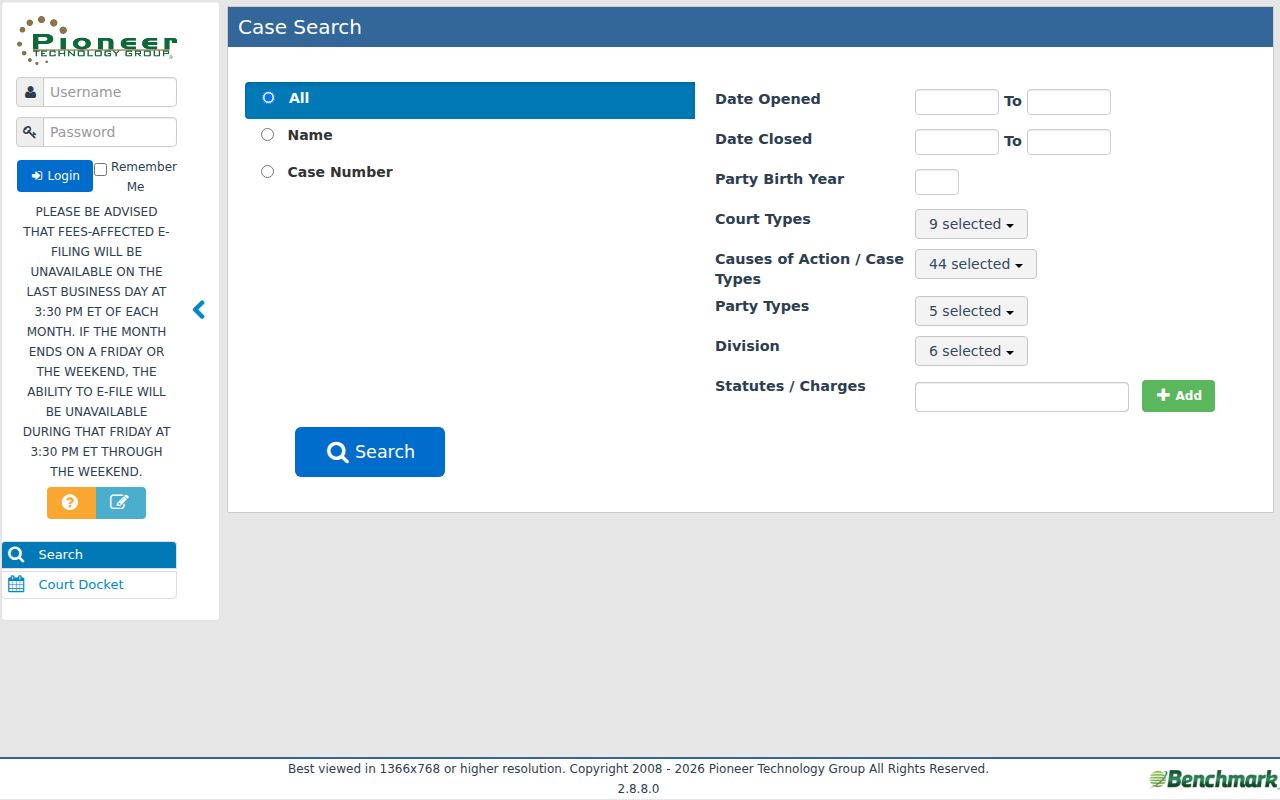
The interface is a route, not the record. It cannot replace confirmation with the Warren County clerk when details or records are needed.
What a Criminal Docket Shows
Read a criminal docket as a dated sequence. The Warren County public search and calendar show identifiers, filters, event times, locations, and case-list controls. What a result does not promise is a charge narrative, bond details, attorney details, or every filed document. Identify the court and case number first. Then separate a scheduled event from an action the court has already entered. That distinction keeps a docket reading honest.
| Case number | A unique court identifier; Benchmark help gives a year, case-type, six-digit example such as 04TR000123. |
|---|---|
| Court and case type | The responsible court plus categories such as Criminal and Felony guide the search. |
| Case history | A chronological list of docket activity and settings, available in Common Pleas history from May 1991 forward. |
| Calendar event | A date, time, judge, location, and event type that identifies a setting, not necessarily a final action. |
| Record request | The clerk route for an actual filed document or a certified court copy. |
Warren County Criminal Docket History
Common Pleas case histories start at May 1991. Updates land at least three times during a normal business day, plus an overnight update. For 1980 through May 1991, the online channel gives only a case or reference number and caption. Older material may need an office visit. Advance notice helps with off-site storage retrieval. So a gap in that span is a record-location issue. It is not a conclusion about the underlying matter.
Public terminals match the web Case Inquiry. The official clerk information lists 513-695-1120. The Clerk of Courts Common Pleas Division sits at 500 Justice Drive in Lebanon. That counter is the sensible follow-up for an older Common Pleas criminal file once the online history gives its reference details.
Note: A historical caption or reference number helps the clerk locate a file. It is not the full criminal docket.
Stages on a Criminal Docket
Warren County calendar labels give a criminal case history its practical shape. A charge or filing comes first. Arraignment follows. Then come pretrial or motion events, and later a plea, trial, disposition, or sentencing entry. The Benchmark calendar includes Plea, Sentencing, and Hearing on Judicial Release labels. Hearing on ILC and probation-violation labels also appear. Those labels mark settings. Separately, County Court rules list video arraignments and preliminary hearings. Pretrials, plea and sentence blocks, and Friday criminal jury trials appear as well.
Docket flow: Filing → Arraignment → Pretrial → Plea or Trial → Disposition → Sentencing.
A plea setting does not fix the final sentence. A hearing label does not settle the case either. Check the later docket entries and the court’s current calendar before trusting any status.
Warren County Criminal Docket Labels
Some docket labels mislead without context. ILC means Intervention in Lieu of Conviction. Benchmark’s Warren County calendar lists both ILC hearings and ILC-violation events. Judicial release is a hearing category, not an automatic release, and a preliminary or final probation-violation event is a setting type rather than a disposition.
- Arraignment
- An initial criminal or traffic appearance; Lebanon’s calendar also distinguishes walk-in and video arraignments.
- Pretrial
- A court event before trial, often used to manage issues or future dates.
- Plea
- A calendar event where a plea may be entered; the later history supplies any resulting action.
- Sentencing
- A post-disposition event type listed on the Benchmark calendar.
- Hearing on Application to Seal Record
- A Benchmark setting label for a sealing request, not proof that a record is already sealed.
Which Court Holds Criminal Dockets
Felony charges in Warren County belong to Common Pleas General Division. That court holds the felony criminal docket. Lower-level work goes elsewhere. Warren County Court takes qualifying misdemeanors, traffic matters, and felony preliminary proceedings within its territory. Mason, Lebanon, and Franklin each run a municipal court of their own. For local traffic and minor misdemeanors, Springboro and Loveland mayor's courts handle those, though neither is a court of record.
A blank search can mean the wrong court. A city name alone picks nothing. Use the court printed on the citation or summons. Add the case type and the territory, then move from Benchmark to the right municipal, County Court, or mayor's court record channel.
Warren County Criminal Docket Territories
Warren County Court hears traffic, misdemeanor, civil, and preliminary felony matters in its territory. Mason Municipal Court covers Mason and Deerfield. Lebanon Municipal Court takes Lebanon and Turtlecreek. Franklin Municipal Court serves Franklin and Carlisle. An early stage on one of these lower-court dockets can sit apart from a later Common Pleas felony history, so the court that owns the case, not a broad county label, sets the record path.
The County Court clerk answers traffic and criminal appearance questions at 513-695-1370. Need to match a place with its court? The official Warren County court-routing table does that. For a Common Pleas General Division criminal record, the Warren County Clerk of Courts is the record owner. That split keeps a Warren County criminal docket search pointed at the correct court channel.
Public Access and Sealed Criminal Dockets
Ohio rules presume the public can see court records. Redaction, restriction, or a sealing or expungement order can still limit that access. Warren County's Case Inquiry shows the case history only. It does not display actual filed images. So a result missing a document proves nothing about the file itself. An absent result may point to the wrong court, the older coverage boundary, a spelling or format problem, or a restricted record.
Ohio access rules:
Ohio Sup.R. 44-47 presumes access while allowing exclusions and redaction.
R.C. 2953.32 governs eligible conviction and bail-forfeiture sealing or expungement applications.
R.C. 2953.34 limits access to sealed records and the maintained sealed-record index.
Warren County Criminal Docket Sealing
Common Pleas posts record-sealing materials for convictions and dismissals. Benchmark's calendar can list a Hearing on Application to Seal Record. Treat that as an event, not an order. The entry means a request reached the court. Nothing is decided by the listing itself. Ohio law sets eligibility, exclusions, timing, and court review, so a criminal docket never proves that a dismissed or resolved matter is hidden or open. The Clerk fee schedule lists a criminal record-sealing filing fee, and the statute carries its own state fee framework.
What can an application cover? The official Ohio sealing statute governs that scope.
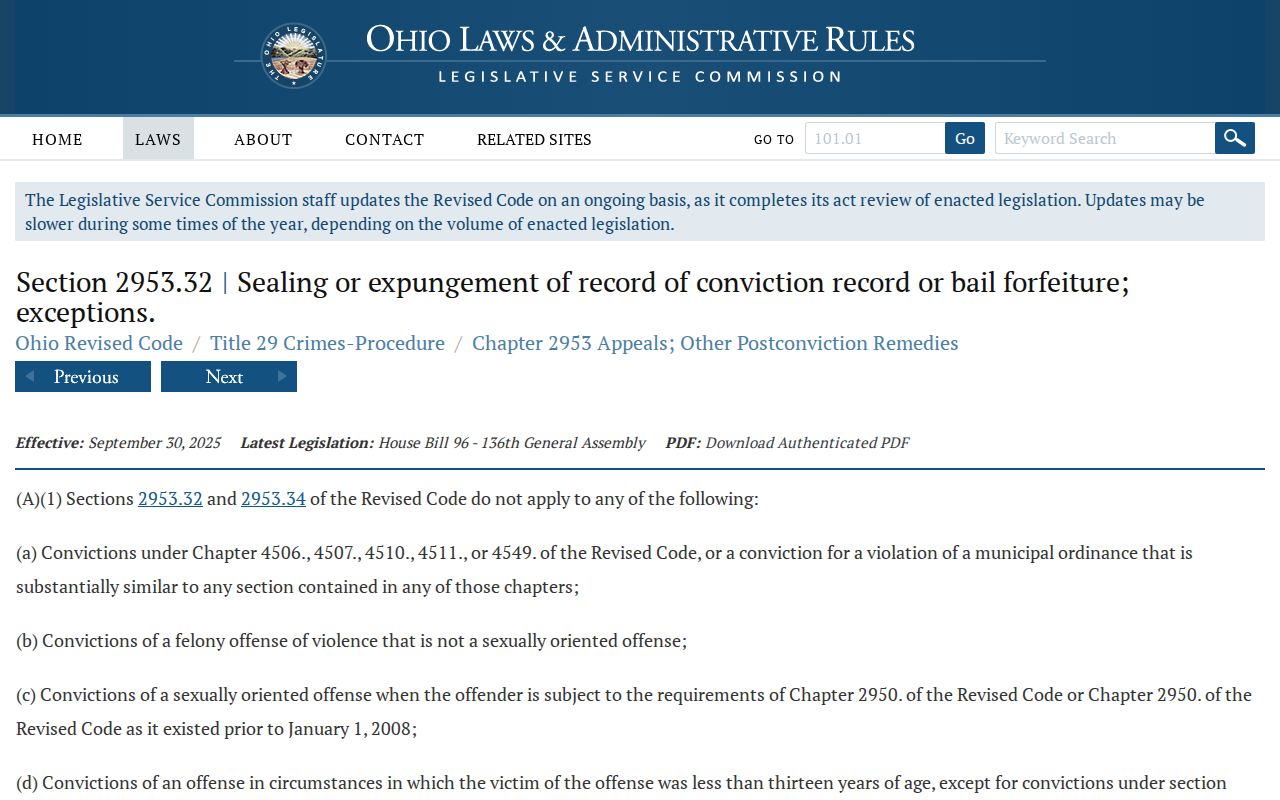
Ask the sentencing court and its clerk about sealing. A plain public docket search will not answer that question.
Warren County Criminal Docket Documents
Case Inquiry gives the case history. The Clerk says so plainly. Actual filed documents are not available there. Common Pleas e-filing instructions cover attorney registration, document upload, and account-based access for specified work in CV and CR cases. Filing and public case-history search are different functions.
Want a copy from Common Pleas? Start with the case number and the exact document. Then ask the clerk about inspection, a plain copy, a certified copy, or an authenticated copy. The fee sheet lists photocopies at $0.05 per page, certified copies at $1 per page, and authenticated copies at $5, though court-specific steps may differ.
Note: a docket entry only identifies court activity. The actual order or pleading must be requested from the record-owning court when available.
Warren County Criminal Docket Calendar
Benchmark Court Docket is a separate scheduling view for Common Pleas. Search it by date, judge, or event type. AM and PM filters and selected-event case lists narrow things further. A calendar entry can locate a criminal setting. The linked case history still matters, since a later entry may have changed the schedule or recorded an action.
County Court criminal matters run under recurring local-rule blocks. Those blocks explain a listing. The case docket, citation, summons, or notice still controls. Ask the assigned court about any specific appearance.
Warren County Criminal Docket Programs
Common Pleas General Division publishes Recovery Court and Veterans Honor Court materials. County Court's local schedule adds SUCCESS Docket and Veterans Court blocks. None of these is a public-case database. The programs do not replace the record. What shows up publicly turns on the case number and the regular docket history. The calendar event matters too. So does the applicable access rule.
Labels carry limited weight. A Recovery, Veterans, ILC, probation violation, or review tag signals the kind of setting. It does not open the full program record. For program details and appearance questions, go to the sponsoring court.