
How to Get Court Records
Start a Common Pleas search by pulling up the public case history. Note the court, the case number, and the exact docket item or document you want. The Clerk’s Case Inquiry information points the public to that history search. It also states plainly that the inquiry does not provide actual documents. So after the search, send a focused request to the record-owning court. Ask for the document, an inspection, or an official copy.
Common Pleas records can be searched online. They can also be checked at a comparable public terminal or the counter. You may inspect them through the Clerk, or order certified or authenticated copies where the clerk offers them. Probate and Juvenile keep separate channels. County Court, municipal courts, and mayor’s courts do too. Ohio has no statewide trial-court portal that replaces these court-specific routes.
- Identify the court, case number, and exact document or record needed.
- Use the official case history or court portal to confirm the basic case information.
- Ask the record-owning court about inspection, plain copies, certified copies, or an authenticated copy.
- For a focused Common Pleas request, state enough detail for staff to identify and retrieve the record.
- Confirm cost, delivery, and any processing estimate before relying on a requested copy.
Warren County Court Record Requests
Common Pleas’ public-records policy sets the ground rules. A request must be clear enough to identify and retrieve the record. Written requests are the court’s general policy, but they are not mandatory, and you may decline to give your identity or intended use. Inspection happens during regular business hours and should be prompt. For a large, stored, or legally reviewed request, the court promises estimated business days, copy cost, and any applicable exemptions.
A denial has to cite legal authority. A partly exempt record gets redacted rather than withheld whole. That is the local route once a public docket gives you the case identifier.
Types of Court Records
Three terms trip up a lot of Warren County court-record requests. A docket or case history is the chronological index of court actions and scheduled events. A filed document is the real thing. It is a pleading, order, judgment, transcript, or other paper tied to an entry. A certified copy is an official copy issued or certified by the authorized clerk. The public history shows court events. It never becomes a certified record just because of that.
- Docket or case history
- The dated list of actions and settings in a case.
- Filed document
- The actual pleading, order, judgment, transcript, or similar record behind an entry.
- Plain copy
- A copy supplied without certification under the applicable court or clerk process.
- Certified copy
- An official clerk-provided copy, listed by the Clerk fee schedule at $1 per page.
- Authenticated copy
- A separate Clerk fee-sheet category listed at $5.
Warren County Court Record History
Common Pleas histories are fully online from May 1991 forward. Older coverage runs from 1980 through May 1991. That stretch may hold only a reference, a case number, and a caption. Off-site material can require advance staff retrieval. The Clerk’s public terminals work like the online Case Inquiry. So the counter is a useful next stop when an older Common Pleas file needs a fuller check.
Public search is not public document delivery. The older-history boundary and the image limitation are two separate reasons a record request can become necessary.
What a Court Record Contains
What you see online and what the court holds are different layers. A public search may expose the case number, caption, court category, dates, filters, and case history. A Court Docket calendar adds date, judge, type, time, location, and the event list. The filed record may contain the document behind an entry. Access rules and redaction still apply.
| Case number and caption | Identifiers used to locate and distinguish the court file. |
|---|---|
| Docket history | Chronological actions and settings maintained in the case. |
| Calendar setting | A scheduled date, time, judge, location, and event type. |
| Filed document | An underlying pleading, order, judgment, transcript, or similar item. |
| Certified copy | A clerk-issued official copy requested through the responsible court channel. |
Warren County Court Record Images
The Common Pleas public Case Inquiry states its own limit. It provides no actual documents associated with a filing. Even so, an online docket event supplies the case number and date a focused request needs. Benchmark’s attorney registration and e-filing functions sit apart from the no-login public history search.
The Clerk’s official explanation draws that distinction directly. Ohio’s sealed-record access statute appears below.
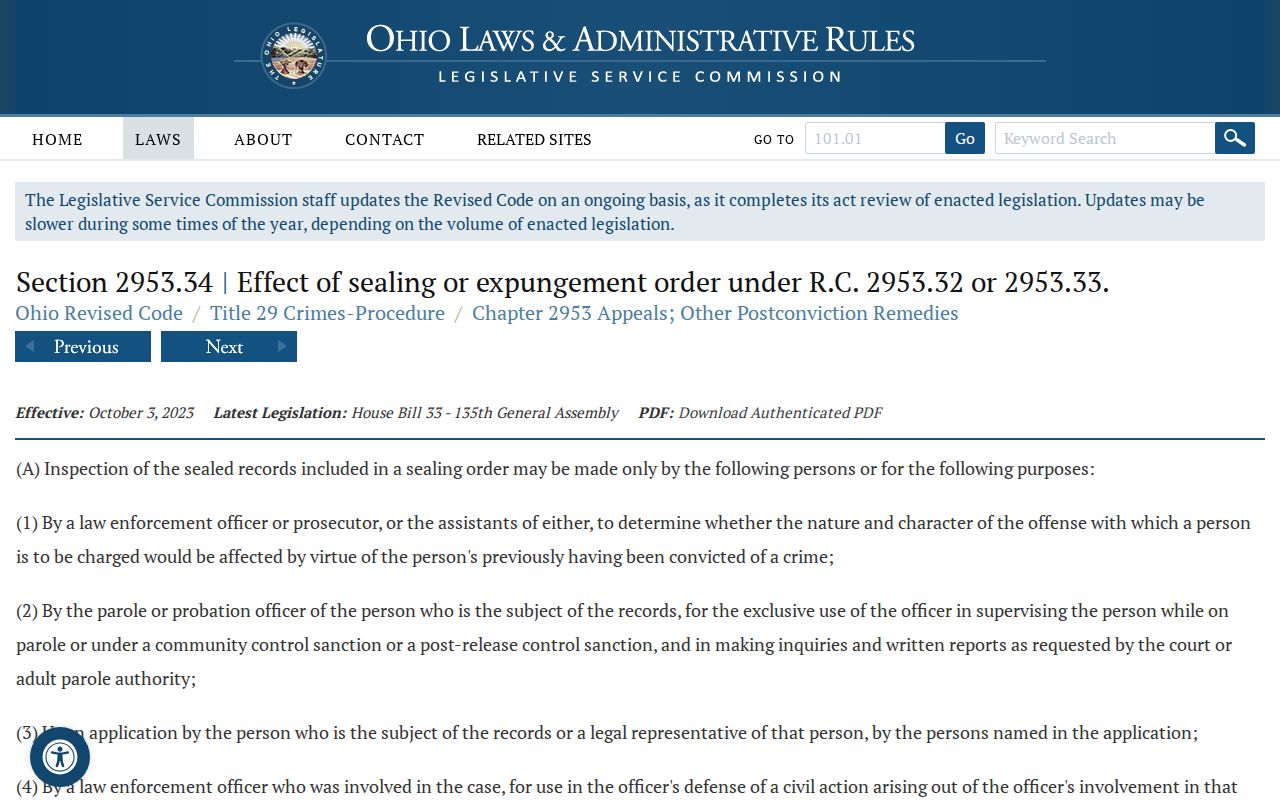
The route to a court record depends on its access status and on the clerk maintaining the underlying case file.
Certified Copies and Fees
Warren County has more than one fee source to watch. The Clerk’s Common Pleas schedule, effective July 1, 2025, prices photocopies at $0.05 per page and certified copies at $1 per page. Authenticated copies run $5. Electronic fax or email transmission costs $2 plus $1 per transmitted page. The Common Pleas public-records policy separately lists $0.10 per black-and-white page and $0.75 per color page, with mailing supplies or postage extra. Keep each amount tied to its named office and process.
| Common Pleas or Clerk item | Official amount | Source context |
|---|---|---|
| Photocopy | $0.05 per page | Clerk fee schedule |
| Certified copy | $1.00 per page | Clerk fee schedule |
| Authenticated copy | $5.00 | Clerk fee schedule |
| Electronic transmission | $2 plus $1 per transmitted page | Clerk fee schedule |
| Public-records paper copy | $0.10 B&W or $0.75 color per page | Common Pleas policy |
Warren County Court Record Fees
The Clerk warns that fees can change without notice. Municipal, County Court, and mayor’s court records carry their own schedules and procedures, so no single amount is a universal Warren County copy fee. Before ordering, confirm the record owner, the copy type, and the current charge.
For Common Pleas General and Domestic Relations records, the Clerk’s office is at 500 Justice Drive, P.O. Box 238, Lebanon, OH 45036. The phone is 513-695-1120. The fax is 513-695-2965.
Warren County Clerk of Courts
500 Justice Drive, P.O. Box 238
Lebanon, OH 45036
513-695-1120
Warren County Court Record Channels
Lebanon Municipal Court gives you three ways to file a public-record request. Mail, fax, or a walk-in visit all work. The form asks for case numbers and a clear description of the records you want. You can also choose a certified copy. The clerk will either hand you one in person or send it by U.S. Mail. Mason handles things a bit differently. It points requesters to its own public-records form. It also treats a hearing audio CD as separate from any transcript you might need prepared.
That is why a request works best when it goes to the court that owns the case. Each court sets its own rules for copies. Ohio’s Public Records Act sets out the state law that governs these requests.
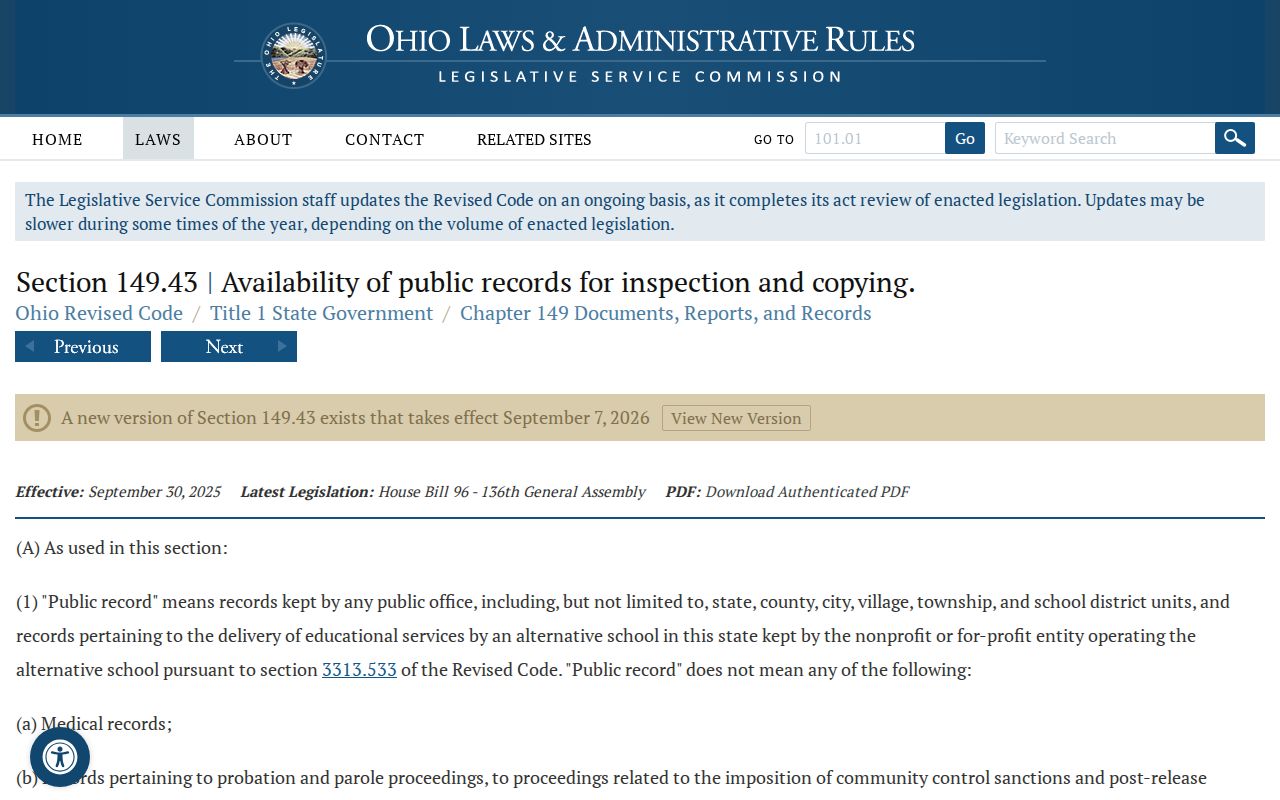
Ohio’s public-record framework sits beside the local procedures each Warren County court and clerk follows.
Public Access and Sealed Records
The presumption runs toward openness. Ohio Sup.R. 44-47 treats court records as public unless an exclusion applies. A redaction rule or another court rule can also say otherwise. R.C. 149.43 obligates public offices to make qualifying records available for inspection and copies within a reasonable period. Exceptions apply, though. Sealing works differently. R.C. 2953.32 and 2953.34 govern adult record sealing and restrict access to records once sealed. Juveniles get a separate path. Juvenile sealing and later expungement follow their own statute and court procedures.
Access statutes: Ohio Sup.R. 44-47 establishes access and personal-identifier rules. R.C. 2953.32 covers eligible adult sealing or expungement applications. R.C. 2151.358 addresses juvenile record expungement after sealing as the statute provides.
Warren County Court Record Redaction
Ever wonder why an online Warren County court record looks thinner than the paper file at the courthouse? Blame redaction. Ohio rules treat certain personal details as protected identifiers. So the clerk masks them before anyone views the record remotely. The list includes Social Security numbers and financial-account numbers. It also covers some employer or employee identifying numbers, plus a juvenile's name in specified abuse, neglect, or dependency matters.
When a public detail is missing from a docket entry, that gap proves nothing. The record may still exist with the sensitive parts blacked out. Warren County Common Pleas policy follows the same logic: release a partly exempt record with the protected identifiers redacted rather than withhold it whole. Any written denial must cite the legal authority behind it. Ohio's juvenile-record expungement statute spells out the official rules the court applies.
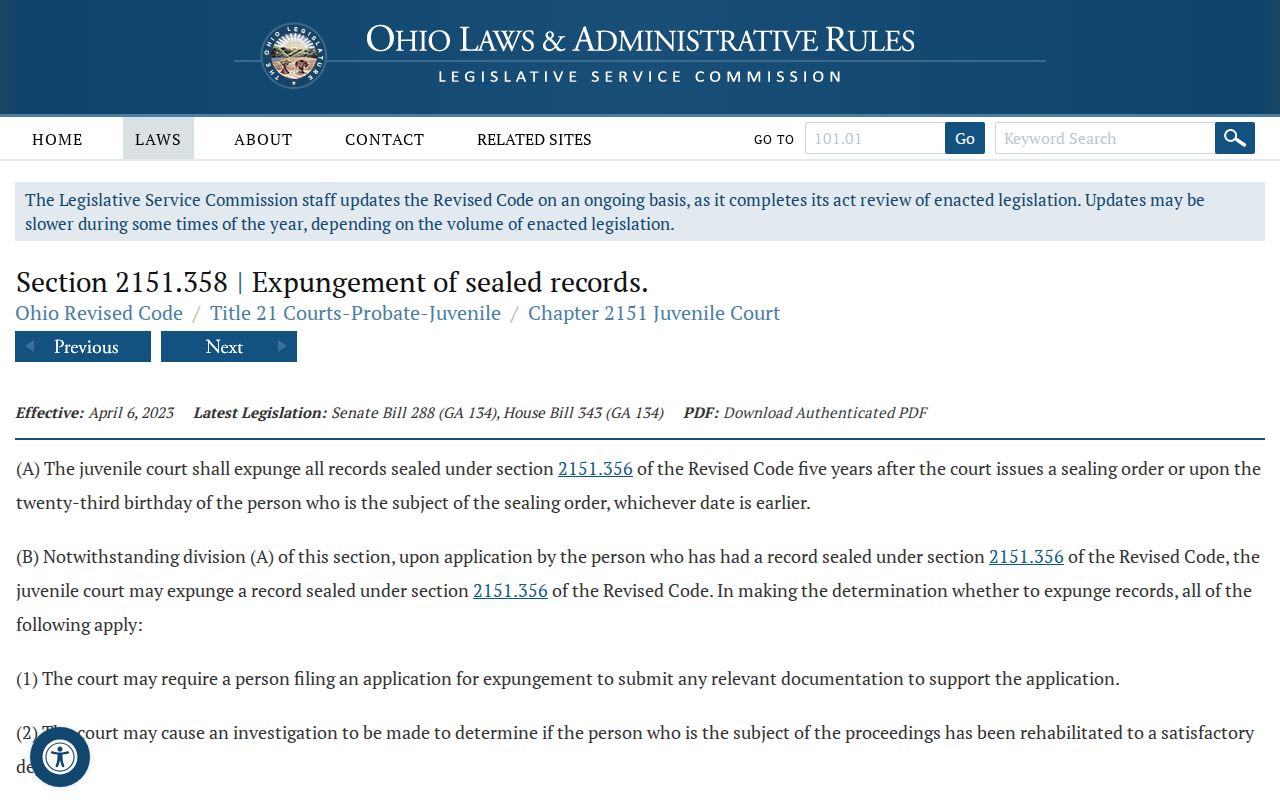
Juvenile access and expungement rules deserve extra care, because Probate/Juvenile keeps its own court-record channel.
Warren County Court Record Delivery
Probate/Juvenile’s public-records form spells out how that division delivers records. A verbal request can be made through the appropriate court. Contact information is optional. The form also draws a line between inspecting a record and getting copies. Two of the selectable delivery methods cost nothing: in-person inspection and electronic delivery. Juvenile filing forms list in-person, fax, drop-box, and email channels as well. Restricted juvenile records still answer to the applicable rules and statutes, whatever channel you use. The Juvenile Court’s official forms information lays out those separate operational channels.
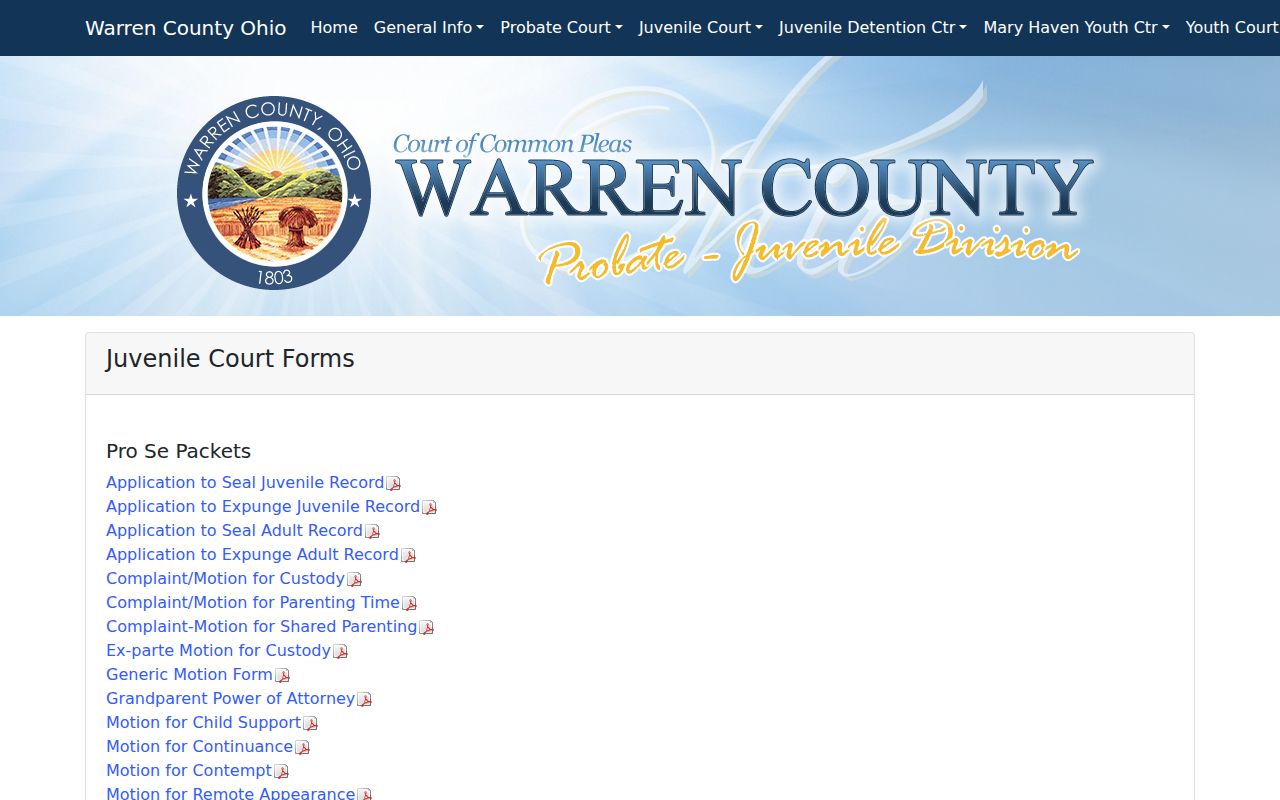
A delivery option never overrides a restriction on the record itself. The division has to confirm what may actually be released before anything goes out the door.
Warren County Court Record Federal Cases
Federal cases do not run through the Warren County Clerk. The county sits in the Southern District of Ohio. The closest listed divisional clerk office is in Dayton. Federal docket and document access runs through PACER. Benchmark, CaseLook, or any Warren County clerk portal will not reach it. So a state-court case-number search will not pull up a federal matter. Keep the two systems straight and you save yourself a dead-end search. The Southern District of Ohio’s Dayton clerk information marks out that federal record layer.
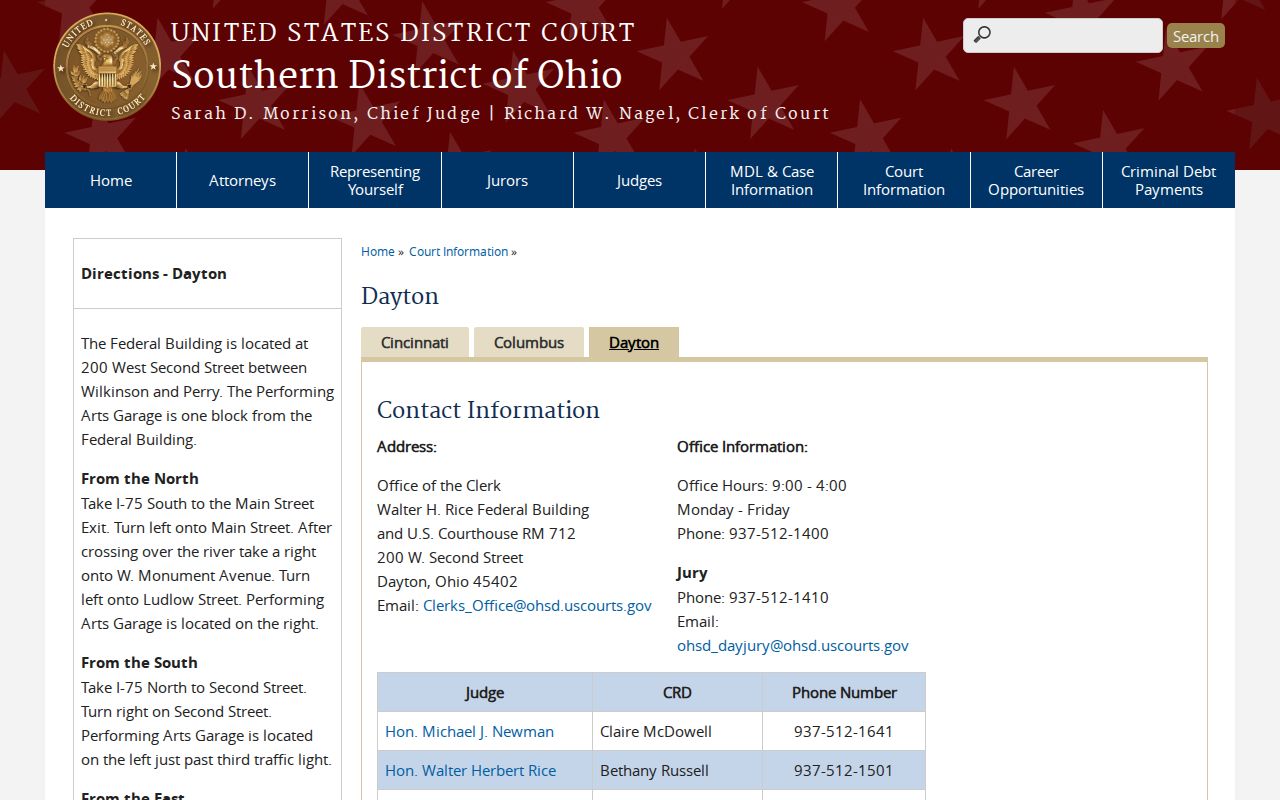
Federal and Warren County court records live in separate systems with different clerks, portals, and document-access rules.